 how-to
How to Taste Wine Like an Expert: 5 Steps (2026 Guide)
Table of Contents
- The 5-Step Tasting Method Experts Actually Use
- Wine Tasting Steps for Beginners: What to Look At First
- Common Wine Tasting Terms and What They Really Mean
- How to Identify Wine Faults Before You Pour It Away
- Glassware and Serving Temperature: Two Things That Change Everything
- Tasting Wine at a Cellar Door: What to Expect
- Frequently Asked Questions
Last Updated: September 14, 2026
The 5-Step Tasting Method Experts Actually Use
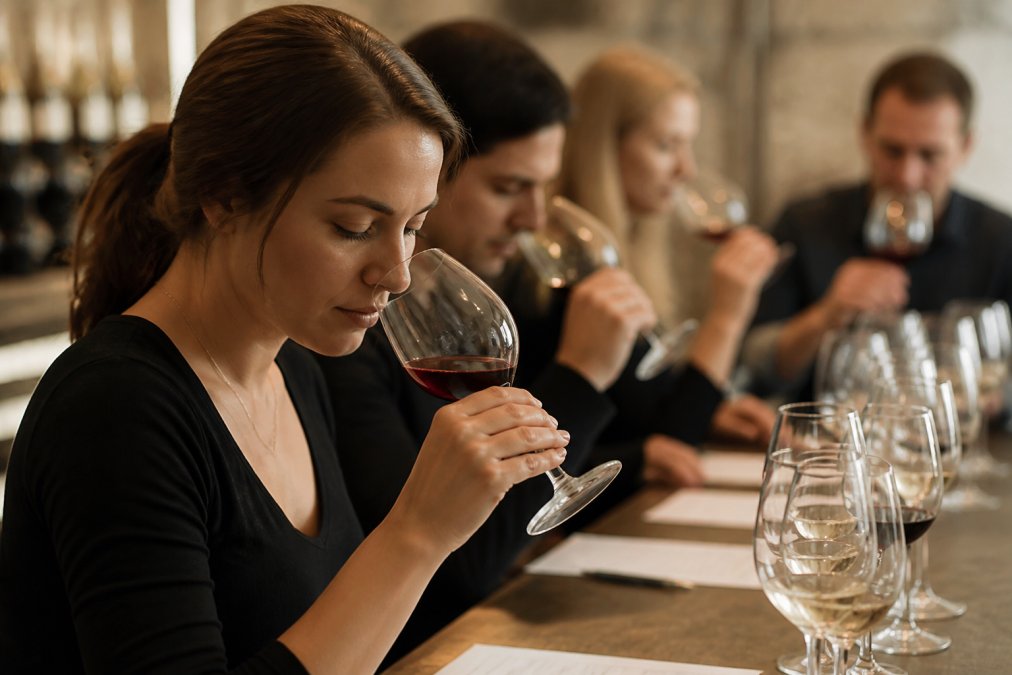
Learning how to taste wine like an expert comes down to five repeatable steps: see, swirl, smell, sip, and savour. This guide from Little River Winery breaks down each stage so you can walk into any cellar door or dinner party and describe what's in your glass with confidence.
The method works because it follows the order your senses actually engage. You notice colour before aroma, aroma before flavour, and flavour before the finish. Skip a step and you'll miss the detail that separates a pleasant glass from one you can talk about.
See, Swirl, Smell, Sip, Savour
Start by tilting the glass against a white background. Look at clarity, colour intensity, and the "legs" that run down the inside after you swirl.
Swirling releases aroma compounds trapped in the liquid. It's not a party trick; it's aeration in miniature.
Then smell before you sip. Most of what you call "taste" is actually aroma, so the nose does the heavy lifting. Take a small sip, let it coat your palate, and note how long the flavour lingers after you swallow. That final stage, the finish, is where quality usually shows itself.
Wine Tasting Steps for Beginners: What to Look At First
Beginners should look at colour and clarity before anything else, because appearance tells you about age, grape variety, and condition before the wine touches your lips.
Hold the glass at a slight angle against something white. A young white wine tends toward pale green or straw; an older white deepens to gold. Reds shift from purple-red when young to brick or garnet as they age. Cloudiness or a dull haze can signal a fault, though some unfiltered wines are naturally hazy.
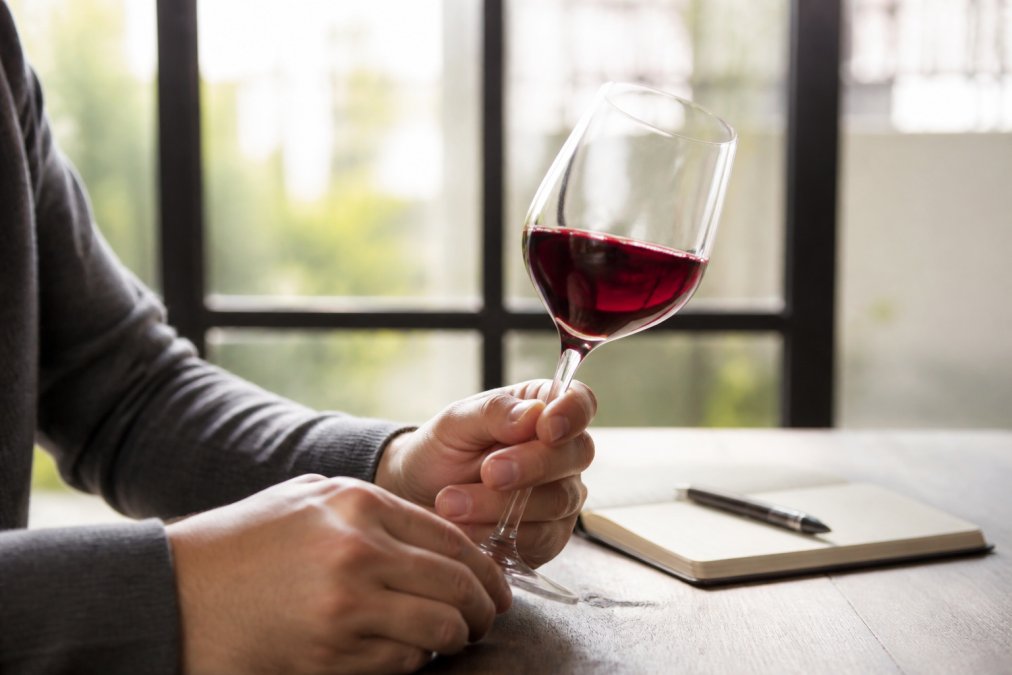
Swirling, Aeration and the Nose
Swirling aerates the wine and concentrates its aroma in the bowl of the glass. Give it three or four gentle turns, then bring the glass to your nose and inhale slowly.
You're looking for intensity and complexity. Does the aroma hit you immediately or build gradually? Can you pick out fruit, floral, spice, or earthy notes? A common mistake is burying your nose in the glass and taking one deep sniff. Short, repeated sniffs separate the layers far better than a single gulp of air.
If a wine smells muted, give it a few more swirls. Some tight young reds need the extra oxygen before they open up.
Common Wine Tasting Terms and What They Really Mean
Wine tasting terms are shorthand for sensations, not jargon designed to exclude you. Once you know what each word points to, you can use it accurately. Most guides stop at a glossary, this one gives you a working lexicon so you can move from "I like it" to "I can describe why."
The Core Structural Terms
These describe how the wine feels and behaves, not what it smells like:
- Tannins: the drying, grippy sensation on your gums, mostly from red grape skins and oak. High tannin feels like strong black tea; low tannin feels smooth and soft.
- Acidity: the mouth-watering sharpness that keeps a wine fresh. High acid makes you salivate; too little and the wine tastes flat and heavy.
- Body: the weight of the wine in your mouth, from light and watery (skim milk) to full and coating (full-cream milk).
- Finish: how long the flavour stays after you swallow. A long finish lingers 30 seconds or more; a short one vanishes quickly.
- Balance: no single element, acid, tannin, fruit or alcohol, dominating the others.
A Descriptor Cheat Sheet
When you smell or taste something and can't name it, work through these categories. Most wine aromas fall into one of them:
| Category | Common descriptors | Where they come from |
|---|---|---|
| Fruit | Citrus, stone fruit, red berry, black berry, tropical | The grape itself |
| Floral | Rose, violet, orange blossom | Grape and fermentation |
| Spice | Pepper, clove, cinnamon, anise | Grape, oak, ageing |
| Earth | Mushroom, wet leaves, forest floor | Ageing, site, grape |
| Oak | Vanilla, toast, cedar, smoke | Barrel fermentation and ageing |
| Mineral | Wet stone, chalk, saline | Site and soil |
Turning Sensations Into Sentences
A simple formula gets you from sensation to description: intensity + category + specific descriptor + structure.
For example: "Medium-intensity nose with red cherry and a hint of clove, high acidity, fine tannin, medium body, long finish." That's a complete, useful tasting note, and every word of it came from the categories above.
Building a Simple Tasting Grid
A tasting grid gives your impressions somewhere to land. Write down five headings, then score each from one to five.
| Category | What You're Assessing | Beginner Pitfall |
|---|---|---|
| Appearance | Clarity, colour, intensity | Ignoring it entirely |
| Nose | Aroma intensity, complexity | One deep sniff only |
| Palate | Acidity, tannin, body | Rushing to swallow |
| Finish | Length and quality | Not waiting to measure it |
| Balance | How elements sit together | Judging each in isolation |
Keep notes for every wine you try. Over a few months, patterns emerge: you'll discover you favour higher acidity, or that you consistently prefer medium-bodied reds. That self-knowledge is worth more than any critic's score.
How to Identify Wine Faults Before You Pour It Away
Most wine faults announce themselves through smell before you taste anything, so trust your nose first.
A corked wine smells like damp cardboard or a musty cellar. It comes from a contaminated cork, and it won't improve with air. Oxidation, by contrast, smells like sherry or bruised apple in a white, or loses its fruit in a red; it happens when too much air has reached the wine. Volatile acidity gives off a sharp vinegar or nail-polish remover note.
If you suspect a fault at a cellar door, say so politely. Staff would rather replace a flawed glass than have you drink it and form a poor impression.
Glassware and Serving Temperature: Two Things That Change Everything
Glassware and temperature shape how a wine shows more than most drinkers realise, and both are entirely within your control. Get them right and a modest wine can taste generous; get them wrong and a good bottle can taste hollow or hot.
Why Glass Shape Matters
The bowl width and rim taper decide where aroma compounds collect and how quickly they reach your nose. A narrow, tall bowl with a tapered rim, the classic Bordeaux shape, concentrates dense, structured reds and pushes their aromas upward. A wider, rounder bowl with a broader base, the Burgundy shape, gives delicate, aromatic wines more surface area to open into, so pinot noir and chardonnay release their perfume instead of hiding it.
You don't need a cabinet full of shapes. A practical two-glass setup covers almost everything:
- A tapered, medium-bowl stemmed glass for cabernet, shiraz, merlot and most fuller whites
- A wider, rounder-bowl stemmed glass for pinot noir, chardonnay, riesling and aromatic whites
What you should avoid is the wide, straight-sided tumbler. It lets aroma escape sideways rather than funnelling it to your nose, which is why the same wine can smell flat in a tumbler and expressive in a stemmed glass. Always fill to the widest part of the bowl, roughly a third, so there's headspace for aroma to gather when you swirl.
Serving Temperature: The Numbers That Matter
Temperature changes the perception of tannin, acidity and alcohol more than almost any other variable. Serve too warm and alcohol dominates and fruit turns flabby; serve too cold and aroma shuts down and tannin feels harsh.
| Wine style | Serve at | What happens if you miss |
|---|---|---|
| Sparkling | 6-8°C | Too warm: froth dissipates, acidity feels loose |
| Crisp whites (riesling, sauvignon blanc) | 7-10°C | Too cold: aroma muted, fruit hidden |
| Fuller whites (chardonnay) | 10-12°C | Too cold: texture feels thin and closed |
| Rosé | 8-10°C | Too warm: alcohol and sweetness push forward |
| Light reds (pinot noir) | 13-15°C | Too warm: alcohol dominates delicate fruit |
| Full reds (shiraz, cabernet) | 15-18°C | Too warm: tannin turns coarse, fruit stewed |
A common pattern is that reds are served too warm. Room temperature in a heated room is often 22°C or higher, which flattens a red's structure. Fifteen minutes in a cooler spot, or ten minutes in the fridge, usually brings it back into balance.
The Order You Taste In
If you're working through several wines, taste lighter and cooler styles before fuller and warmer ones. Sparkling and crisp whites first, then fuller whites and rosé, then light reds, then full reds. This progression stops a big shiraz from coating your palate and masking the delicacy of everything that follows.
Tasting Wine at a Cellar Door: What to Expect
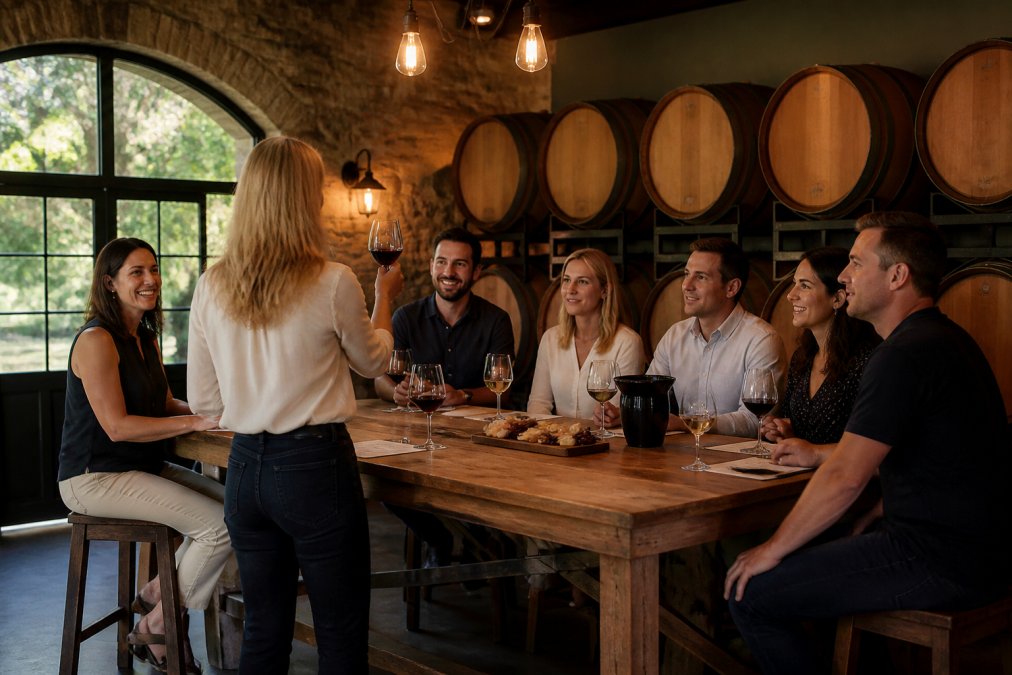
A cellar door tasting is a guided experience, not a test. You'll usually be offered a flight of wines poured in a set order, from lighter styles through to fuller reds.
At Little River Winery, cellar door tastings are capped at 8-10 guests per group, which keeps the experience personal and gives everyone room to ask questions. Our range covers sparkling, white, rosé, and red, so there's a natural progression to taste through.
A few practical habits make the visit better. Eat something beforehand, drink water between pours, and use the spit bucket if you're driving. Take notes, even rough ones. And ask questions; the person pouring knows the wines intimately and can point you toward styles that match what you already enjoy.
If you're ordering for a dinner party or a larger celebration, tasting first removes the guesswork. Try the BRUT de BRUT for a sparkling that suits a crowd, the CHARDONNAY 2020 if you prefer a softer white, or the SHIRAZ 2022 for old-vine depth. The FLORIAL 2025 covers a crisp, dry rosé with strawberry aromas.


Tasting wine well isn't about memorising vocabulary; it's about slowing down and paying attention to what's already in the glass. The more you practise the five steps, the more detail you'll notice, and the easier it becomes to describe what you like and why.
That's the approach we take at Little River Winery. Our cellar door tastings, capped at 8-10 guests, let you work through our sparkling, white, rosé, and red range at your own pace, with someone on hand to answer questions as they come up. Get started with Little River Winery and taste your way to a wine you'll confidently serve at your next table.
Frequently Asked Questions
What are the 5 S's of wine tasting?
The 5 S's are See, Swirl, Smell, Sip and Savour. See means checking colour and clarity. Swirl releases aroma compounds. Smell identifies the nose. Sip spreads wine across your palate. Savour assesses the finish. Working through them in order slows you down and gives you a repeatable method, which is exactly how you taste wine with more confidence each time.
How do you identify wine faults like cork taint or oxidation?
Cork taint smells like damp cardboard or a musty cellar, and it flattens the fruit. Oxidation shows as browning colour in white wine, a sherry-like or bruised-apple smell, and a tired, flat palate. Volatile acidity reads as vinegar or nail polish remover. If the aroma makes you recoil rather than lean in, treat it as a fault and ask for a replacement bottle.
Does glassware really change how a wine tastes?
Yes. A narrow flute concentrates carbon dioxide and pushes aromas upward, which suits sparkling wine. A wide bowl gives red wine more surface area for aeration, softening tannins and releasing bouquet. A small tumbler traps nothing, so lighter whites and rosé end up smelling muted. Matching the glass shape to the varietal is one of the quickest ways to improve your tasting accuracy.
Can you visit Little River Winery for a guided tasting?
Yes. The cellar door runs guided tastings where you work through sparkling, white, red and rosé styles, including the Brut de Brut and the 2022 Shiraz. Tasting groups are capped at 8-10 guests so each person gets proper attention and a chance to ask questions. Booking ahead is recommended, particularly on weekends and during peak visitor periods.