 how-to
How to Store Wine at Home: A Complete Guide
Table of Contents
- Why Proper Wine Storage Matters
- Ideal Wine Storage Temperature and Why It's Critical
- Controlling Humidity and Light to Prevent Oxidation
- Bottle Orientation: Horizontal vs. Vertical Storage
- Storing Wine Without a Cellar: Practical Solutions
- How Long Does Wine Last After Opening and How to Store It
- Common Mistakes to Avoid When Storing Wine at Home
- Conclusion
Last Updated: August 28, 2026
Why Proper Wine Storage Matters
Storing wine correctly is the difference between a bottle that improves with age and one that deteriorates in your cupboard. Most people treat wine storage as an afterthought, they buy a bottle, stick it somewhere, and hope it survives until they drink it. But wine is a living product. It continues to evolve after you purchase it, and the conditions you provide determine whether that evolution improves the experience or ruins it.
The stakes matter more than you might think. A premium bottle stored poorly can lose its character, develop off-flavours, or oxidise before you ever taste it. Conversely, a modest wine stored correctly can develop complexity and depth that surprises you months or years later. At Little River Winery, we craft wines intended to age gracefully, which is why understanding how to store wine at home has become essential knowledge for anyone serious about wine appreciation.
Temperature fluctuation is the primary culprit that damages wine. Vibration, light exposure, humidity imbalance, and cork degradation follow closely. Each of these factors compounds over time. A bottle exposed to all five problems simultaneously will fail faster than one exposed to just one. The good news: you don't need a temperature-controlled cellar to get storage right. You need to understand the principles and apply them strategically to your home environment.
Ideal Wine Storage Temperature and Why It's Critical
The ideal temperature to store wine at home is between 7°C and 18°C, with 13°C being the sweet spot for most wines (peer-reviewed research). This range keeps the wine stable without accelerating chemical reactions that lead to premature ageing. The critical principle isn't the exact number, it's consistency. A wine stored at a steady 16°C will age far better than one that swings between 10°C and 20°C every week.
Why does temperature matter this much? Wine ages through oxidation, a slow chemical process that develops flavours and complexity over years or decades. Temperature controls the speed of this reaction. Too cold and the wine essentially freezes in time, developing very slowly or not at all. Too warm and oxidation accelerates, causing the wine to age too quickly and lose its fresh characteristics. Thermal shock, rapid temperature changes, can also cause the cork to expand and contract, breaking the seal and allowing air inside.
Most Australian homes sit somewhere between 18°C and 25°C on average, which is warmer than ideal but manageable if you're storing wine for short periods (weeks or a few months). For long-term cellaring of premium bottles, you'll need to find a cooler spot or invest in temperature control. A dark corner of a basement, a wine fridge, or even a dedicated wine cabinet can bridge this gap.
The relationship between temperature and storage duration matters here. A wine you plan to drink within three months can tolerate warmer conditions. A wine you're ageing for five years or more needs consistent cool temperatures to develop properly without thermal stress degrading the cork.
Controlling Humidity and Light to Prevent Oxidation
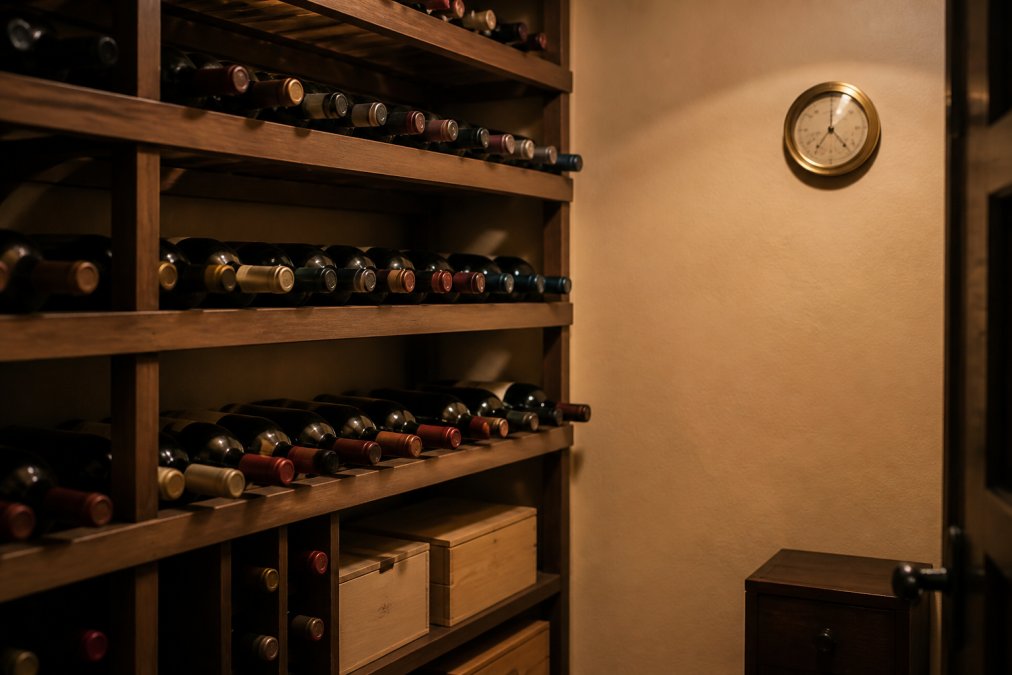
Humidity levels between 50% and 80% are ideal for wine storage at home (peer-reviewed research). Too dry and the cork dries out, allowing air to seep past it and oxidise the wine prematurely. Too humid and you risk mould growth on the label and potential cork degradation. A hygrometer, an inexpensive device available from hardware stores, lets you monitor this accurately.
Light is equally critical. Ultraviolet (UV) rays degrade wine rapidly, breaking down the compounds that give it colour, flavour, and aroma. This process, called light strike, can happen in weeks under direct sunlight. Dark glass bottles offer some protection, but they're not foolproof. Clear and light-coloured bottles are particularly vulnerable. The solution is simple: store wine in a cool dark place, away from windows and bright artificial lighting.
Many people make the mistake of storing wine in a kitchen cabinet near the stove or in a living room shelf exposed to afternoon sun. These locations are convenient but destructive. Instead, consider a hallway cupboard, a shaded corner of a pantry, or an interior wall space away from heating vents and direct light. If your home is naturally dry (common in Australian climates), you may need to monitor humidity more carefully. A small humidifier placed near your storage area can help maintain the 50-80% range.
The combination of darkness and moderate humidity creates an environment where wine can age gracefully without the chemical stress that leads to cork taint or oxidation. This is why wine collectors prize cellars, they naturally maintain both conditions simultaneously.
Bottle Orientation: Horizontal vs. Vertical Storage
The position of your bottle matters, and it depends on the closure type. For bottles sealed with a traditional cork, horizontal storage is superior. When a bottle lies on its side, the wine stays in contact with the cork, keeping it moist and preventing it from drying out. A dried cork shrinks, allowing air to enter and oxidise the wine. Horizontal storage solves this problem naturally.
For bottles with a screwcap, vertical storage is perfectly acceptable, and often preferred. Screwcaps don't dry out, so there's no benefit to keeping them horizontal. Vertical storage actually saves space and is easier to manage in a home setting.
The practical reality: most home storage situations are mixed. You'll have corked bottles and screwcap bottles together. The compromise is to store everything horizontally if you have the space, or to prioritise horizontal storage for premium corked wines you're ageing long-term, and store everyday screwcap wines vertically. A wine rack designed for horizontal storage works well for both, and it keeps bottles visible and organised.
Avoid storing bottles at steep angles or upside-down. These positions can cause sediment to shift, and if a cork is involved, the wine-to-cork contact becomes unreliable. Sediment itself isn't harmful, but it can cloud the wine's appearance and affect mouthfeel if it ends up in your glass.
Storing Wine Without a Cellar: Practical Solutions
Most people don't have a cellar, and that's fine. You can store wine successfully in a flat using a few strategic approaches. The key is finding the coolest, darkest, most stable spot in your home and optimising it.
The simplest solution is a dedicated wine fridge or wine cabinet. These devices maintain consistent temperature and protect from light exposure. They range from compact underbench models holding 20-50 bottles to larger freestanding units. For someone serious about wine appreciation, a wine fridge eliminates the guesswork and handles both temperature and humidity control automatically.
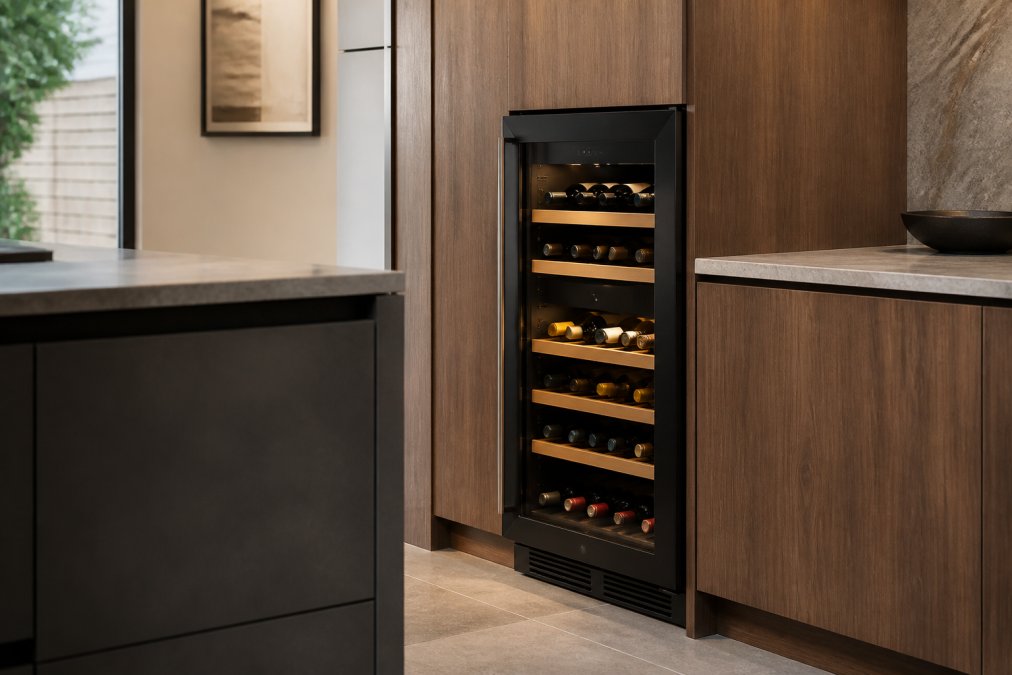
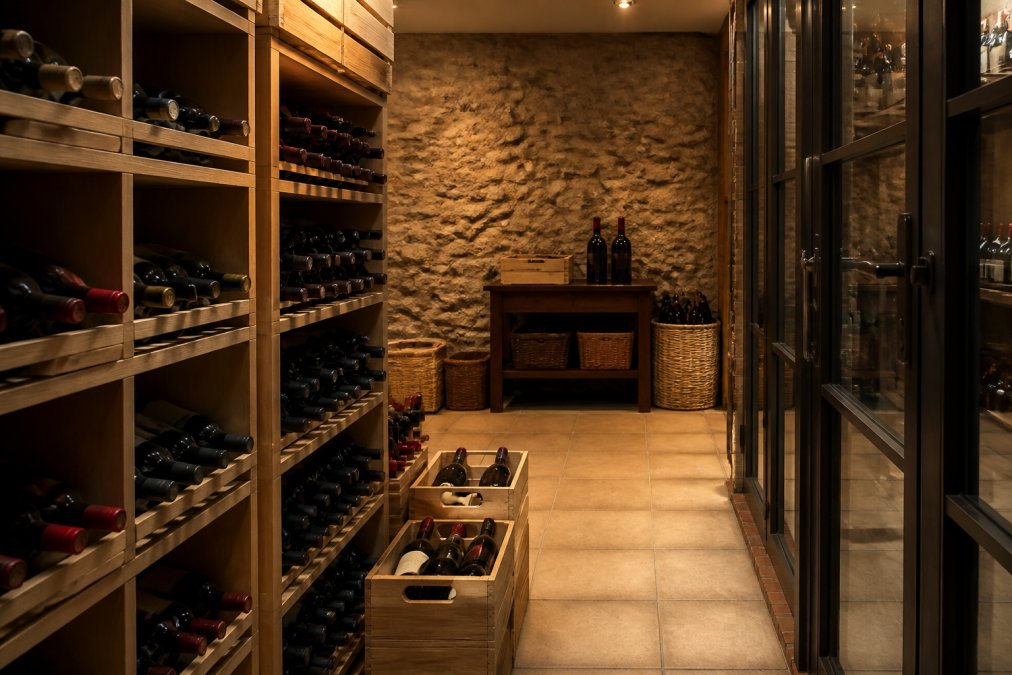
If a wine fridge is outside your budget, work with what you have. An interior cupboard away from the kitchen is your next best option. Avoid areas near heat sources (ovens, heaters, hot water pipes) or windows. A cool hallway cupboard or a shaded corner of a pantry works surprisingly well. Line the cupboard with dark cloth or paint the interior dark to block any light that seeps in.
For short-term storage, bottles you plan to drink within a few weeks, ambient temperature is less critical. A cool corner of a living room, a low shelf in a bookcase away from sunlight, or even a dark cupboard in a bedroom can work. The risk increases with time, so adjust your approach based on how long you're holding the wine.
Some people use a wine rack placed in a cool cupboard, combining space efficiency with darkness and temperature stability. Others invest in a wine storage box, an insulated container designed to maintain consistent temperature. These are cheaper than wine fridges but less precise.
The common mistake is overthinking it. You don't need perfection. You need cool, dark, and stable. Find that in your home and you're most of the way there.
How Long Does Wine Last After Opening and How to Store It
Once you've opened a bottle, the rules change completely. Oxidation accelerates dramatically because now the wine is exposed to oxygen directly, not just the tiny amount that might seep past a cork. Most wines begin to noticeably degrade within 3-5 days of opening, though some hold up longer (peer-reviewed research).
The first step after opening is to reseal the bottle. A wine stopper, a simple rubber or silicone plug, slows oxidation by reducing air contact. It's not perfect, but it's far better than leaving the bottle open. Place the stopper in firmly and store the bottle upright in a cool, dark spot. Upright storage prevents the remaining wine from prolonged contact with the stopper, which can absorb flavours.
Temperature matters just as much for opened bottles as unopened ones. An opened bottle stored in a cool kitchen cupboard will last longer than one left on a warm bench. Ideally, keep opened wine in the coolest part of your home, a wine fridge, a cellar, or even a regular fridge if you don't mind serving it chilled.
Some wines age better after opening than others. Full-bodied red wines with high tannins can hold up for a week or more. Light white wines and sparkling wines deteriorate faster, often becoming flat or losing their character within 2-3 days. Fortified wines like port and sherry are exceptions, they can last weeks or even months after opening because their higher alcohol content acts as a preservative.
For serious wine drinkers, vacuum-seal systems (which remove air from the bottle using a pump and special stopper) can extend the life of an opened bottle to 7-10 days. These are inexpensive and worth considering if you regularly open bottles and don't finish them immediately.
Common Mistakes to Avoid When Storing Wine at Home
The most common mistake is storing wine in a kitchen cupboard near the stove or in a dining room cabinet above a radiator. Heat is the enemy, and kitchens are the warmest rooms in most homes. Even if the temperature doesn't exceed 25°C, the proximity to heat sources creates micro-fluctuations that stress the wine.
Another frequent error is storing wine in a fridge designed for food. Household fridges maintain around 4°C, which is far too cold for long-term wine storage. They're also very dry, which dries out corks. A food fridge is fine for chilling a bottle before serving, but not for storing wine for weeks or months.
Storing wine upright when it has a traditional cork is another classic mistake. Over time, the cork dries out, shrinks, and allows air in. If you're storing corked wine, even for a few weeks, lay it on its side or at a slight angle.
Light exposure is underestimated. Many people store wine on open shelves in living rooms, thinking it looks nice. But even ambient room light, especially if it includes any sunlight, will degrade the wine over time. Store wine where you can't see it, that's usually where it's safest.
Vibration and movement are often overlooked. Wine stored near a washing machine, a speaker system, or a high-traffic area experiences constant micro-vibrations that can accelerate oxidation and sediment disturbance. Find a stable, quiet spot.
Finally, many people don't monitor their storage conditions at all. You don't need expensive equipment, but a simple thermometer and hygrometer tell you whether your chosen spot is actually suitable. If temperature swings wildly or humidity is consistently outside the 50-80% range, adjust your approach.
Storing wine properly at home doesn't require a cellar or expensive equipment. It requires understanding the principles, cool, dark, stable, and sealed, and applying them consistently to wherever you choose to keep your bottles. Whether you're holding a bottle from Little River Winery for a special occasion or ageing a collection you've built over years, the fundamentals remain the same. Find a cool, dark corner of your home, monitor temperature and humidity when possible, and your wine will reward you with the flavours and complexity it was meant to develop. For premium wines you're planning to age long-term, consider a wine fridge to remove the variables entirely. For everyday bottles, a cupboard and a wine stopper are often enough.
Frequently Asked Questions
What is the ideal temperature for storing wine at home?
Wine stores best at a consistent temperature between 10-15°C. Aim for 13°C if possible, as this temperature slows the ageing process and prevents premature ageing from heat or thermal shock from temperature fluctuations. Consistency matters more than hitting an exact figure, temperature swings of more than 3°C per day can damage even well-sealed bottles. If your home varies seasonally, a wine fridge maintains this stability year-round.
How long does wine last after opening?
Most opened wines stay fresh for 3-5 days when stored correctly. Red wines last longer than whites due to higher tannin content. Fortified wines like port can last 2-3 weeks. Store the bottle upright with the cork replaced (or use an airtight stopper), keep it away from heat and light, and refrigerate it to slow oxidation. Sparkling wines lose carbonation within 1-3 days, even sealed.
Can I store wine without a wine fridge or cellar?
Yes. Store bottles in a cool, dark cupboard away from the kitchen, where temperature stays steady. A cool bedroom corner, hallway, or under-stair storage works well if the space avoids sunlight and heat sources. Keep a hygrometer nearby to monitor humidity, aim for 50-80% to protect cork moisture and prevent cork degradation. Avoid areas above radiators or near windows. For long-term cellaring without a fridge, consistency and darkness are your best tools.
Should wine bottles be stored horizontally or vertically?
Store wine bottles horizontally (on their side) if they have a cork, as this keeps the cork moist and prevents it from drying out, which can lead to cork taint and premature oxidation. Bottles with screwcaps can be stored upright. Horizontal storage also maximises space on a wine rack and keeps the wine in contact with the cork, maintaining the seal's integrity over time.
This article was written using GrandRanker