 ultimate-guide
Why Premium Wine Costs More Than Retail
Table of Contents
- The Real Cost Behind Premium Wine Pricing
- Production Methods and Viticulture: Where Costs Begin
- How Long Does Premium Australian Wine Age in Oak and Bottle
- The Difference Between Reserve and Standard Wine
- Factors Influencing Wine Pricing: From Vineyard to Cellar Door
- Mass-Produced Versus Boutique Wines: What You're Paying For
- The Psychology of Price: Why We Perceive Premium Wine as Better
- Frequently Asked Questions
Last Updated: September 3, 2026
The Real Cost Behind Premium Wine Pricing
When you're standing in front of a wine shelf, the price gap between a $16 bottle and a $100 bottle can feel inexplicable. Both contain wine. Both come in similar bottles. Yet one costs six times more. The difference isn't arbitrary, it's the result of dozens of decisions made long before the bottle reaches your hands.
At Little River Winery, we've spent years understanding what drives these price variations. From the moment a vineyard decides how to cultivate its vines through to the final marketing push, costs accumulate in ways most consumers never see. This guide breaks down why premium wine costs more than retail, examining everything from production methods to taxes, distribution, and the psychology that shapes how we perceive value.
The reality is that premium wine costs more because premium wines genuinely cost more to produce. Understanding the breakdown reveals where your money actually goes.
Production Methods and Viticulture: Where Costs Begin
The foundation of wine pricing is established in the vineyard, years before fermentation begins. Hand-harvesting versus machine-harvesting represents one of the clearest cost dividers between mass-produced and premium wines.
Hand-harvested fruit costs significantly more because skilled labour selects individual bunches at optimal ripeness, leaving underripe or damaged fruit behind. Machine harvesting strips all fruit mechanically, fast and indiscriminate. A vineyard using hand-harvesting might spend three to four times more on labour alone.
Terroir, the specific characteristics of soil, climate, and geography, directly influences production costs. Premium wine regions command higher land values and stricter environmental regulations. A vineyard in a marginal climate might need frost protection systems and irrigation management that add thousands per hectare annually.
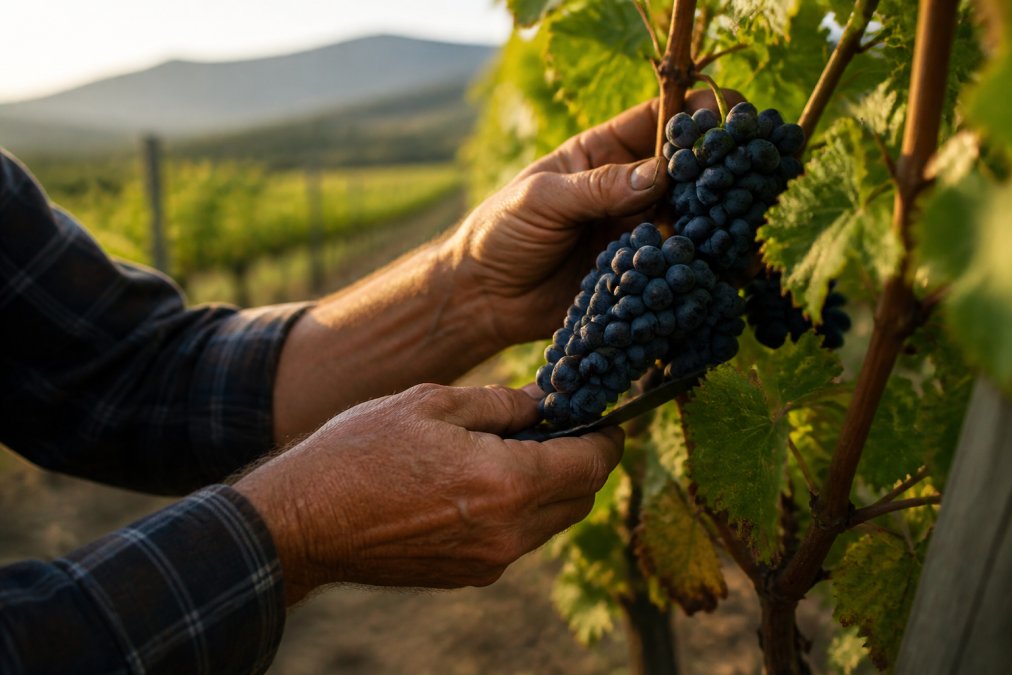
Premium producers deliberately restrict yield to ensure every grape reaches optimal flavour development. A premium vineyard might spend twice as much on canopy management and soil maintenance simply to achieve the fruit quality their market demands.
Older vines produce smaller yields but often deliver more complex fruit. Premium producers accept years of reduced production while new vines mature, a significant capital investment that mass producers avoid.
How Long Does Premium Australian Wine Age in Oak and Bottle
The aging process represents one of the most significant cost differences between premium and mass-produced wines. Premium wine costs more partly because premium wines spend considerably longer in oak barrels and bottle storage before release.
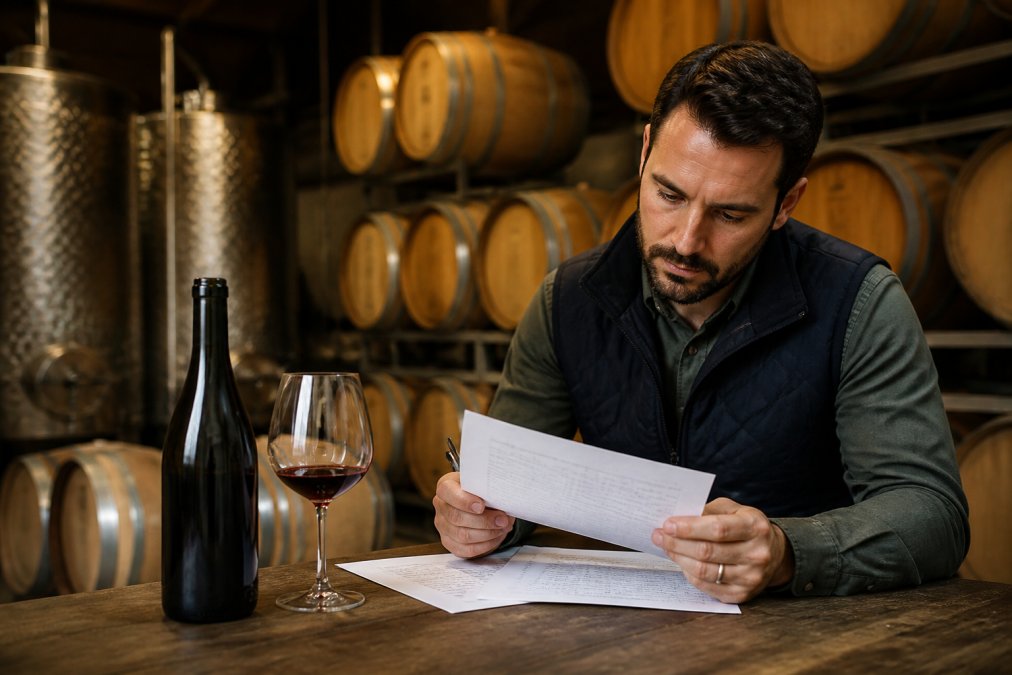
A typical mass-produced wine might spend three to six months in stainless steel tanks before bottling. Premium wines often spend 12-24 months in oak barrels. Oak barrels cost $800-2,000 each and can only be used for a limited number of vintages. A winery aging 10,000 litres of wine in oak needs 40-50 barrels, a capital investment of $40,000-100,000.
Oak aging adds complexity and structure, but evaporation loss during aging, called "the angel's share", means you're literally paying for wine that disappears. A wine spending 18 months in barrel might lose 15% of its volume.
The type of oak influences both cost and price. French oak costs two to three times more than American oak but imparts different flavour characteristics. Premium producers select oak origins based on desired flavour profile, not cost minimisation.
After bottling, premium wines often age in temperature-controlled cellars for two to five years before release. During this time, capital is tied up in inventory, storage requires climate control, and insurance costs accumulate. Mass-produced wines hit the market within months of bottling.
The Difference Between Reserve and Standard Wine
Reserve wines represent the upper tier of a winery's production and command premium pricing for specific reasons. A standard wine is made from fruit across the entire vineyard block. A reserve wine comes from the best parcels, with the winery rejecting 30-40% of harvested fruit to use only the finest for reserve bottlings.

Reserve wines often spend more time in premium oak and age longer before release. Reserve wines might see 100% new oak for 18 months, compared to 30% new oak for six months in standard wines.
Reserve wines are sometimes bottled unfined and unfiltered, preserving maximum flavour complexity but requiring more careful handling. The unfined approach adds cost and risk but appeals to serious wine collectors.
A winery might produce 50,000 cases of standard wine but only 2,000 cases of reserve wine. The reserve wine spreads fixed costs across fewer bottles, raising the per-unit cost and creating scarcity that influences pricing.
Factors Influencing Wine Pricing: From Vineyard to Cellar Door
Wine pricing reflects a complex chain of decisions and costs that extend far beyond the vineyard gate.
Taxes, Duties, and Government Levies
Excise tax on wine in Australia is one of the largest hidden costs in the pricing chain. The Australian government applies excise duty based on alcohol content, not wholesale price, making the tax a larger percentage of cheaper wines' price. For wines above 7% alcohol, excise adds $3-8 per bottle.
Wine businesses also navigate goods and services tax (GST) at 10% on final retail price. A premium wine priced at $100 includes $10 in GST. Import duties apply to wines sourced overseas, adding another layer of cost.
Supply Chain and Distribution Margins
The path from winery to consumer involves multiple intermediaries, each taking a margin. A winery typically sells to distributors at 40-50% of recommended retail price. The distributor sells to retailers at 50-60% of retail. Retailers mark up to their final selling price, typically doubling the distributor's cost.
A wine that costs the winery $10 to produce might wholesale for $15, sell to retailers for $25, and appear on shelves at $40-50.
Premium wines often follow shorter distribution chains. A winery selling direct to consumers captures the full retail margin. A wine that costs $50 in a bottle shop might cost $30 directly from the winery.
Cold chain logistics add significant costs for premium wines. Temperature-controlled transport and specialised handling are non-negotiable for quality preservation but expensive.
Branding, Marketing, and Status Symbol Premiums
Marketing expenses for premium wines are substantial and directly influence pricing. A major wine brand might spend millions annually on advertising and sponsorships. These costs are recovered through higher prices.
Brand reputation creates a "status symbol premium", consumers pay more for wines with established prestige. A wine from a famous producer commands higher prices partly because of name recognition.
Wine critics and scoring systems influence pricing dramatically. A wine receiving a high score from an influential critic often sees its price increase significantly. The cost of pursuing critical recognition is built into premium pricing.
Limited production creates artificial scarcity that supports higher prices. A winery might deliberately limit production to maintain exclusivity and justify premium pricing.
Mass-Produced Versus Boutique Wines: What You're Paying For
Mass-produced wines prioritise consistency and efficiency. A major producer makes the same wine vintage after vintage, using fruit from multiple vineyards. Production happens at enormous scale, millions of bottles annually. Production costs might reach $3-5 per bottle, allowing retail prices of $12-18.
Boutique wines prioritise expression and individuality. A small producer might make 5,000 cases annually, using fruit exclusively from their own vineyard. Each vintage tastes different because the producer responds to that year's growing conditions. Production costs might reach $10-15 per bottle, requiring retail prices of $30-60.
The economics of scale create a fundamental cost difference. A mass producer spreads fixed costs across millions of bottles. A boutique producer spreads the same fixed costs across thousands of bottles.
At Little River Winery, we offer a curated selection of premium wines, including sparkling, white, and red varieties. We are dedicated to crafting exceptional vintages that capture the unique character of our vineyard. Our sparkling wines like the BRUT de BRUT represent this philosophy, made with boutique attention to detail but priced accessibly.

The Psychology of Price: Why We Perceive Premium Wine as Better
Price itself influences how we perceive quality. The anchoring effect shapes wine perception powerfully. When you see a wine priced at $80, that price becomes your reference point, and you expect it to be significantly better than a $20 wine. Neuroscience research shows that higher prices activate reward centres in the brain differently, literally changing the sensory experience.
Prestige and exclusivity create perceived value independent of taste. A wine that's difficult to find or limited in production commands higher prices partly because consumers value the exclusivity itself.
Expert validation amplifies price perception. A wine with a 95-point score will sell for significantly more than an identical wine with an 85-point score. This creates a feedback loop where producers invest in producing wines that will score well.
The "you get what you pay for" heuristic leads consumers to assume higher prices reflect higher quality. This assumption is often correct, but the relationship isn't linear. A $50 wine isn't necessarily 2.5 times better than a $20 wine.
Understanding this psychology helps consumers make better purchasing decisions. A $25 wine might deliver more genuine pleasure than a $75 wine if you're not paying for prestige or scarcity.
Understanding why premium wine costs more than retail ultimately comes down to recognising that price reflects genuine production differences, supply chain realities, and psychological factors working together. When you purchase a premium wine, you're paying for superior fruit selection, extended aging in quality oak, careful vineyard management, and experienced winemaking expertise. Little River Winery's range, from our accessible BRUT de BRUT at $16 to our MISTELLE ROUGE 20Yo Tawny at $40, reflects this philosophy of transparent pricing backed by genuine production quality. Knowing what drives the price difference helps you make purchasing decisions aligned with your preferences and budget.

Frequently Asked Questions
Q: Is there really a noticeable difference in quality between mass-produced and premium wine?
A: Yes. Mass-produced wines prioritise consistency and volume, often using machine-harvesting and shorter ageing periods to reduce costs. Premium wines invest in hand-harvested fruit, longer oak barrel ageing, and careful viticulture practices that develop complexity and depth. A $22 Shiraz Reserve reflects these labour-intensive methods, whilst budget wines achieve affordability through economies of scale and streamlined production.
Q: How long does premium Australian wine age before it reaches the market?
A: Premium wines typically age 12 to 36 months in oak barrels, then several more months in bottle before release. This extended ageing allows flavours to mature and integrate. Reserve-designated wines often spend longer in premium oak, which adds cost. Standard wines may skip barrel ageing entirely or use neutral vessels, reducing production time and expense. The ageing process is a primary driver of premium wine pricing.
Q: What is the difference between reserve and standard wine?
A: Reserve wines come from the winery's best fruit, selected for superior ripeness and flavour potential. They undergo longer barrel ageing in premium oak, which adds depth and complexity. Standard wines use broader fruit selection and shorter ageing, keeping costs lower. The 'reserve' designation signals stricter quality control and investment in time and materials, justifying a higher retail price point for discerning buyers.
Q: What factors contribute most to the price of premium wine?
A: The biggest cost drivers are hand-harvesting labour, oak barrel ageing (premium oak costs significantly more), terroir quality, and production yield per acre. Excise tax and GST add roughly 20% to the retail price in Australia. Branding, marketing, and distribution margins account for 30-40% of the final cost. Together, these factors explain why a premium bottle costs three to five times more than a standard wine at the bottle shop.
This article was written using GrandRanker